
Reference ranges are not universal recipes
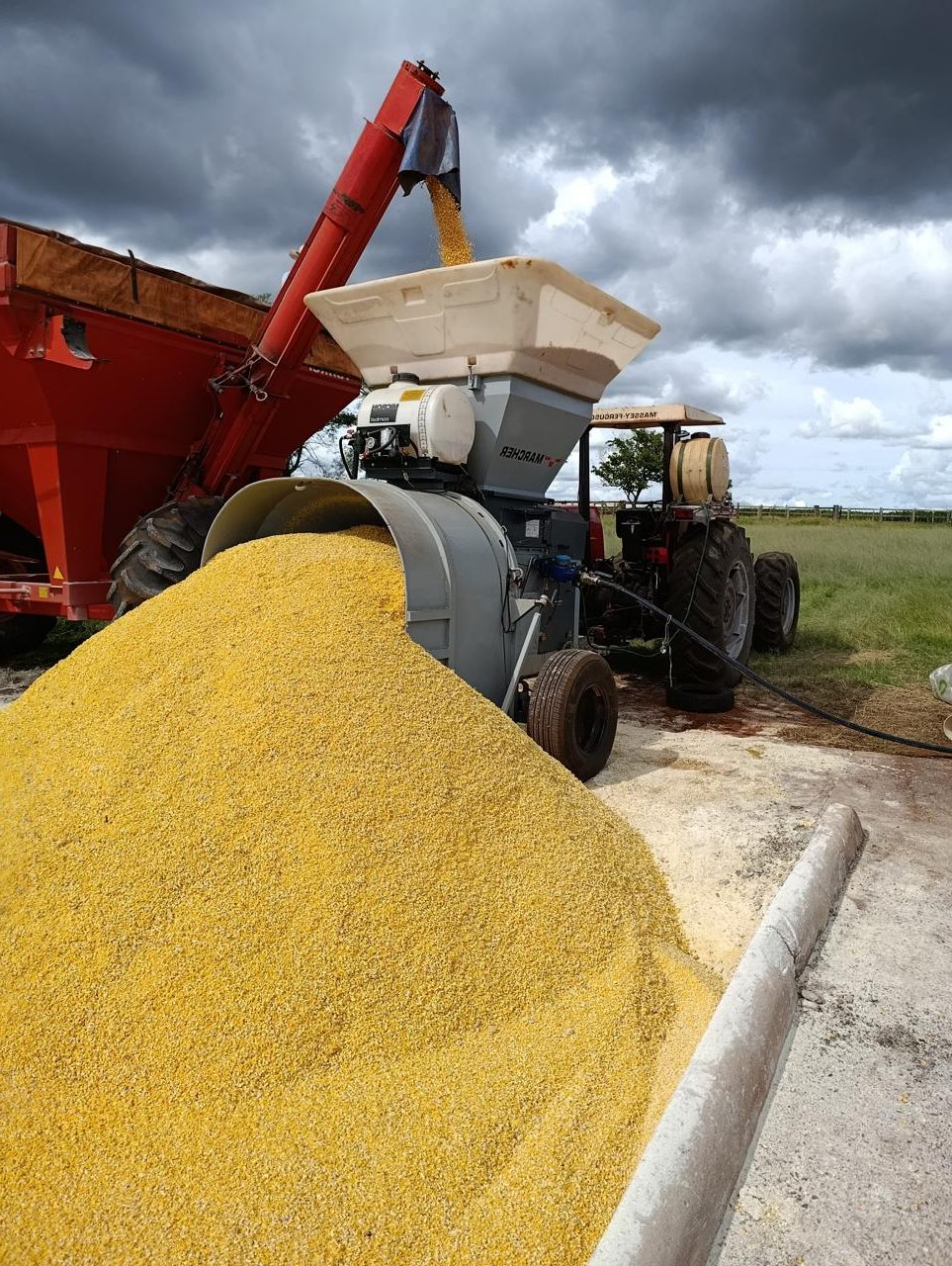
Technical sources cite different ranges depending on system and objective. In rehydrated corn, experimental work has evaluated moisture levels around 30% to 40%. In MillS field practice, targets of 35% to 40% may be used in certain rehydration projects after evaluating equipment, grain and storage. For corn harvested at high moisture, other ranges may be more appropriate.
What happens when there is too little water
Drier material tends to make packing and fermentation more difficult and can retain more oxygen between particles when density is low. In rehydrated grain, insufficient water also limits the conditions needed for the desired changes during ensiling.
What happens when there is too much water
Excess water increases transported mass and can increase effluent or make handling more difficult in certain systems. Water addition also changes cost per ton as-fed. Therefore, the target should be technically and economically justified.
How to monitor during operation
Moisture readings should be repeated by batch and throughout the shift. Moisture meters must be used consistently with representative samples. During rehydration, water flow must track changes in machine capacity: if tons per hour increase while water flow stays constant, final moisture decreases.
Practical control points
- Set the target before milling begins.
- Record initial and final moisture.
- Recalculate water when the batch or throughput changes.
- Use a composite sample, not just a superficial handful.
- Relate moisture to observed stability and losses.
Common questions about this topic
Is 35% moisture always the best target?
No. It is a common reference in some rehydration systems, but not a universal recommendation.
Can water be adjusted by appearance alone?
That is not recommended. Appearance can help, but it should be supported by moisture measurements and mass balance.
Does final moisture change cost?
Yes. It changes the as-fed mass obtained per ton of dry matter, as well as water demand, logistics and storage capacity.
Related technical basis
Gomes et al. (2020), Jacovaci et al. (2021). See the complete references and interpretation limitations in the MillS Technical Center.
The values and ranges cited are technical and operational references. Final recommendations depend on grain, machinery, diet, storage, climate and economic goals.