
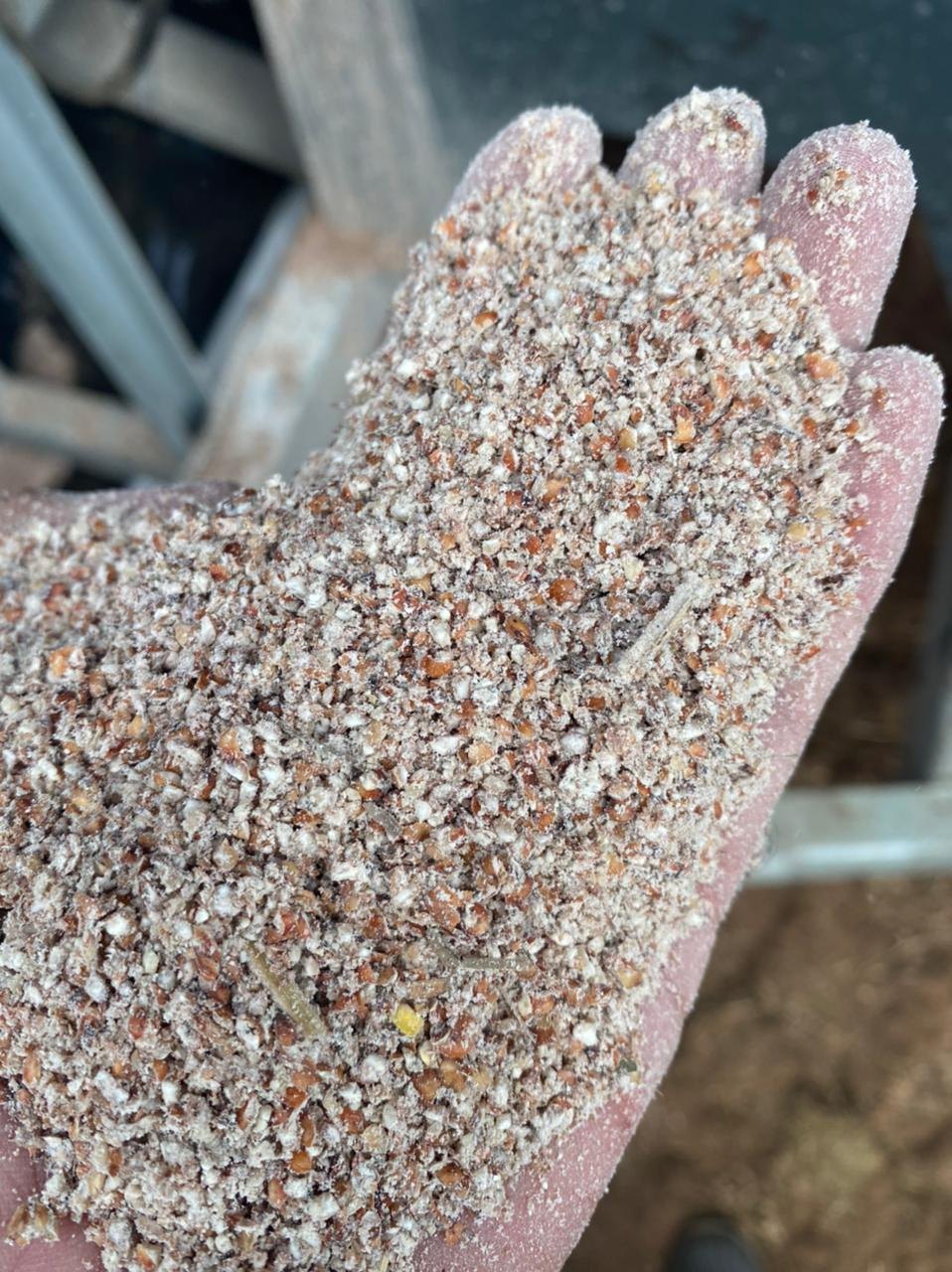
What changes during storage
After sealing, oxygen consumption and fermentation alter the silo environment. Acidification and proteolysis change the grain matrix. In ensiled corn, part of the expected benefit is associated with greater starch exposure as matrix proteins are degraded.
Why “60 days” appears as a practical reference
Technical studies often use periods ranging from several weeks to months to compare quality and digestibility. Approximately 60 days can be used as an operational reference to avoid opening too early, but it should not become a universal promise. Studies evaluate responses at different storage times, moisture levels and processing methods.
Inventory must be planned before milling
When a farm wants to increase ensiling time, it must build transition inventory. This requires calculating daily use, bag or silo capacity and expected opening date. Without planning, the system may be opened too early because feed inventory runs short.
Time does not fix a poor process
More days do not compensate for low moisture, poor mixing, oxygen presence or inadequate sealing. Storage time amplifies the quality of what was placed in the silo, so initial processing and preservation quality remain decisive.
Practical control points
- Plan transition inventory.
- Record filling and opening dates for each bag.
- Avoid treating one storage time as a universal rule.
- Combine storage time with moisture and processing.
- Evaluate stability and performance after opening.
Common questions about this topic
Can rehydrated corn be used immediately after production?
Technically yes, but the product has not yet gone through the fermentation period and the changes expected from ensiling.
Is more storage time always better?
Not necessarily. Storage can provide benefits, but there are practical limits and risks of loss when preservation is poor.
Is storage time the same for ground and rolled corn?
It should not be assumed. Processing method, moisture and ensiling conditions interact with storage time.
Related technical basis
Hoffman et al. (2011), Gomes et al. (2020). See the complete references and interpretation limitations in the MillS Technical Center.
The values and ranges cited are technical and operational references. Final recommendations depend on grain, machinery, diet, storage, climate and economic goals.